
August 7, 2015
What children and museums can learn from the silkworm
Yumiko Ishinabe, Silk Museum
During the month of May, the Silk Museum runs a for-profit project to distribute silkworm eggs to institutions such as primary schools. This year, 564 schools, from daycares and kindergartens to high schools, grew silkworms using our eggs. Many first-time teachers carry large boxes with them and are surprised at the small size of the bags containing the eggs.
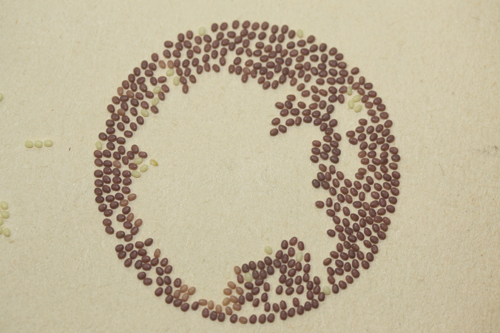
Silkworm eggs. Diameter approximately 1 mm, which look like plant seeds.
We run a short presentation explaining how to care for the eggs and silkworms when the eggs are distributed, but we still receive many questions. The silkworm was domesticated by humans for their ability to produce silk. In order for them to produce silk, we must care for them by giving them mulberry tree leaves and cleaning their excrements. Children who were initially afraid of the silkworms eventually became affectionate as they cared for the worms, and some even cried when the silkworm began to produce its cocoon, exclaiming that the silkworm disappeared. This is probably because the children could not see the silkworm that they worked hard to care for during the month, and I was genuinely surprised the first time I heard about this reaction.
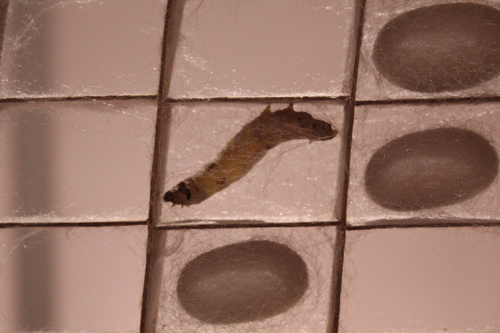
The silkworm begins its cocoon production and will eventually stay inside.
When third-grade students come to the museum, we show them the movie "Silkworm" or give them a short lecture explaining the silkworm. Visitors to our museum can experience weaving silk and spinning thread as well as feel a variety of silk materials. The most popular is the silk floss, where cocoons that cannot be shipped for raw silk are boiled in an alkaline bath and stretched. I often hear comments like "it's so soft!" and "it's so warm" or "I want to sleep in this" when they feel the silk on their skin. After seeing some of the students rubbing the scarf over their faces and exclaiming "This feels so good!", I started asking them to talk more about how amazing silkworms are, so that the children open up with their own stories about the silkworms.
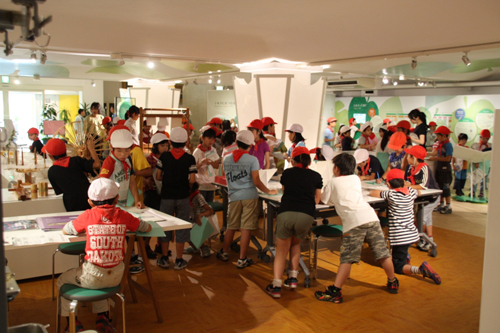
Students gathered around the hands-on corner.
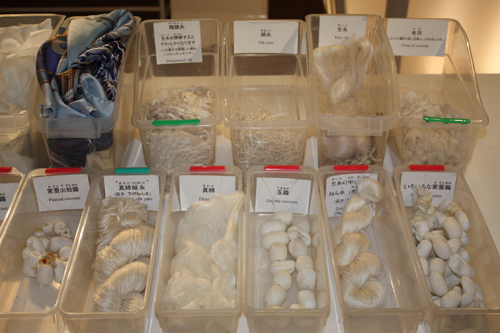
The third from left in the bottom row is the popular silk floss.
As a follow up to taking care of the silkworms, we have a "Fun Silkworm Presentation" meeting. We collect observational diaries and newspaper clippings as well as works of art made from cocoons such as dolls and woven materials, and display them in the museum in December. As usual, the pictures drawn by the children or the observational diaries of students tell a tale of the silkworm from the fresh perspective of these children. The children's focus on the large amount of silkworm excrements lit a lightbulb in my head for a new topic. I wanted to speak to the children about how silkworm excrements, rich in chlorophyll, are used in food, medicines, and as dyes.
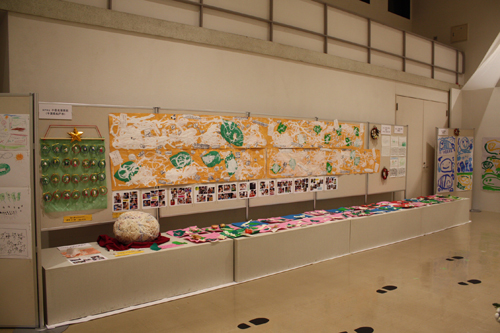
Artworks created by children and students.
The aim of taking care of silkworms is to teach the importance of life and the ecology of living organisms to children. However, the museum would also like the children to know about the importance of silkworms in industry. In some cases, the silkworm life must end as a chrysalis inside the cocoon for silk to be produced. Our goal is to introduce these two facets of the silkworm's life and continue to educate visitors about the Japanese silk industry.
Silk Museum
1 Yamashita-cho, Naka-ku, Yokohama, Kanagawa 231-0023
- Telephone:
- 045-641-0841
- Access:
- 3 minutes walking from Nihon Oodori Station, Minato Mirai Line
- Hours:
- Tuesday to Sunday 9:30 to 17:00 (last admission at 16:30)
- Holidays:
- every Monday (open on statutory holidays that fall on a Monday, closed the following day)
- Admission:
- general: 500 yen
university students: 200 yen
high school students: 200 yen
seniors 65 and older: 300 yen
primary and middle school students: 100 yen
*group rates available for groups over 20 - Website :
- http://www.silkcenter-kbkk.jp/museum/en/
